
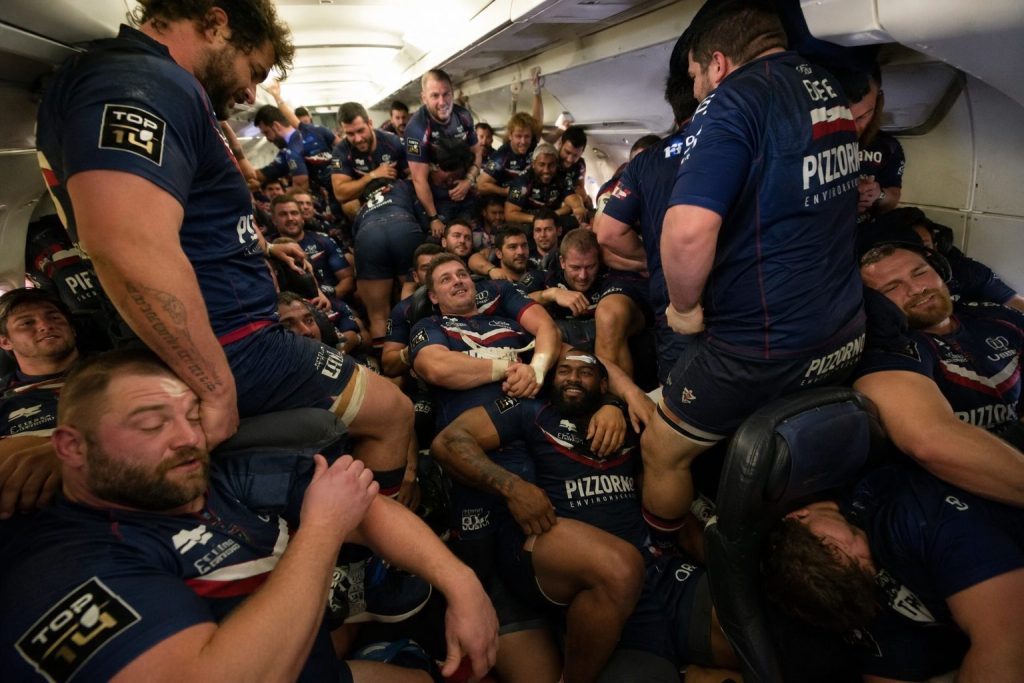
*AI-generated image
When a sports club, school, or team starts planning a trip by plane, there’s often one common reaction:
“How come the ticket costs more for 30 people than for 2 people?”
Intuitively, one might think that a group should automatically qualify for a discounted fare. However, in the airline industry, that’s not always the case… and there are several very practical reasons behind this.
Airlines operate using “booking classes”
On a plane, not everyone paid the same price.
Even if passengers are seated next to each other, each ticket belongs to a different “fare class.” Airlines use a revenue management system that constantly adjusts prices based on:
- flight load,
- the period,
- Upon request,
- anticipation,
- and the number of remaining low-cost seats.
Example:
- The first 4 seats can be sold for 80 €.
- The next 10 for 120 €.
- Then the next ones at 180 €.
When you search for 2 tickets, the search engine can still find seats for 80 €.
But when you're searching for 25 seats at once, it has to find 25 available seats in the same fare class… and it automatically switches to a higher fare class.
The group often has to travel together
When participating in a sports or school group, it is generally essential to:
- to be on the same flight,
- with the same schedule,
- and sometimes with the same baggage allowances.
The airline must therefore “reserve” a large number of seats on a single flight. This represents a greater commercial constraint than a simple individual reservation.
Group rates also offer hidden benefits
A group rate is not just a “price.”
It often includes services that individual low-cost tickets do not offer:
- Passenger names can be changed later,
- a down payment instead of immediate payment,
- appropriate baggage allowance,
- seats grouped together,
- dedicated support,
- flexibility in the event of changes,
- option to add passengers.
In sports, this flexibility is essential: injuries, last-minute roster changes, and coaching staff changes happen all the time.
Sports teams often have a lot of luggage
That's another important point.
A team traveling with:
- sports bags,
- medical equipment,
- equipment,
- Sometimes bicycles or specialized equipment result in additional costs for the company.
Some companies therefore take this type of group into account in their pricing policies.
The later you book, the greater the impact
Groups often need time to:
- approve a budget,
- confirm the participants,
- obtain approval from a federation or club.
Result:
Tickets are sometimes booked later than for a typical individual trip.
And in the airline industry, prices generally rise over time.
So… is traveling in a group still a good option?
Yes, in many cases.
Because in addition to the gross ticket price, a group benefits from:
- a simplified organizational structure,
- more flexible terms and conditions
- better management of unforeseen events,
- and dedicated customer service provided by the companies
Whether it's a training camp or an international tour, these factors are often just as important as the price itself.
The Role of a Specialized Agency Like SPORT’N GO
An agency that specializes in sports teams can, in fact:
- compare several air strategies,
- negotiate allocations,
- Choose the best group service offered by an airline
- optimize baggage allowances,
- or ensure that the conditions for modification are secure.
The goal is not just to get “the cheapest ticket,” but above all to find the solution that best suits the group.
And sometimes, avoiding a logistical problem is well worth the few euros difference in the ticket price.